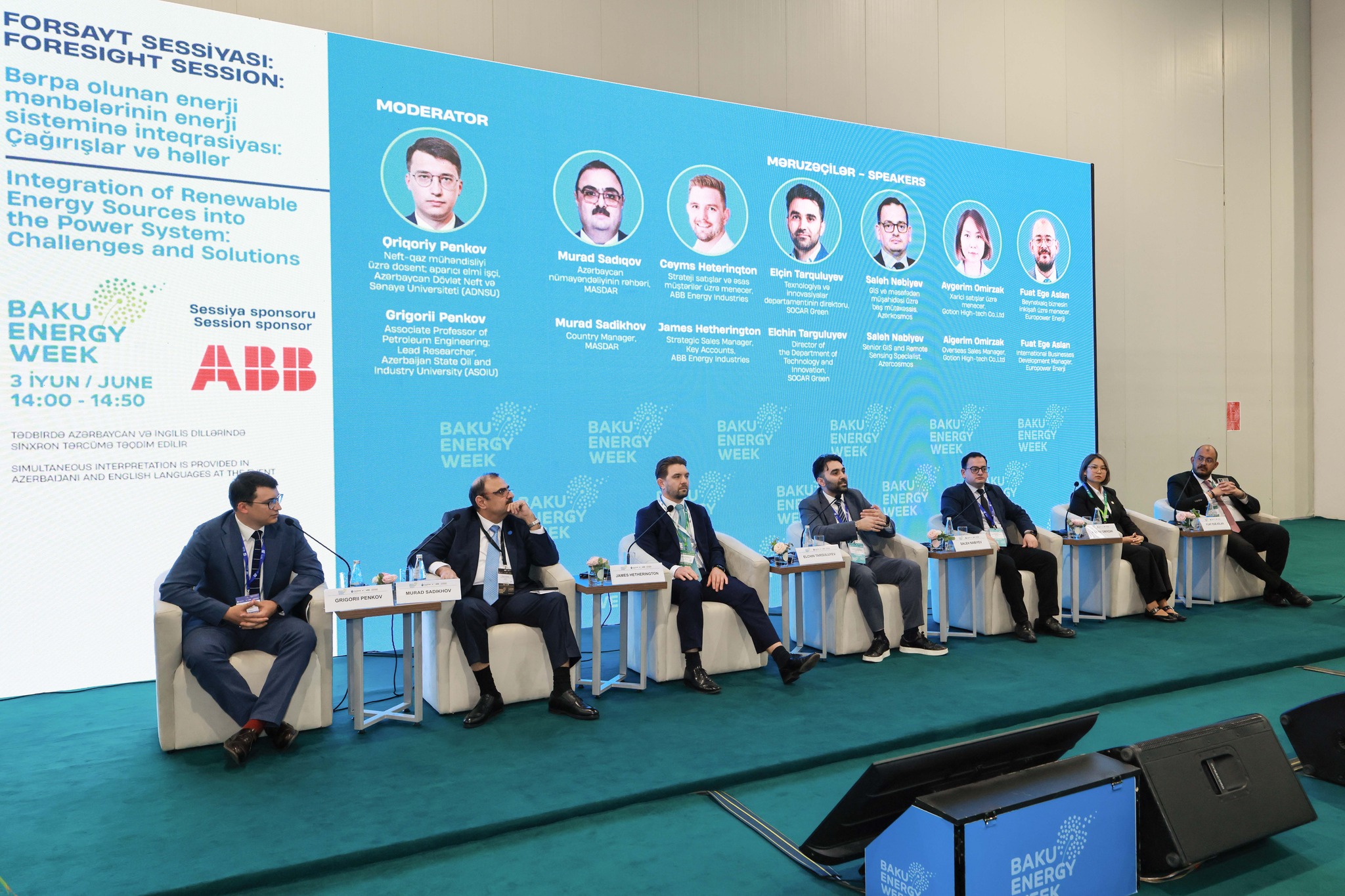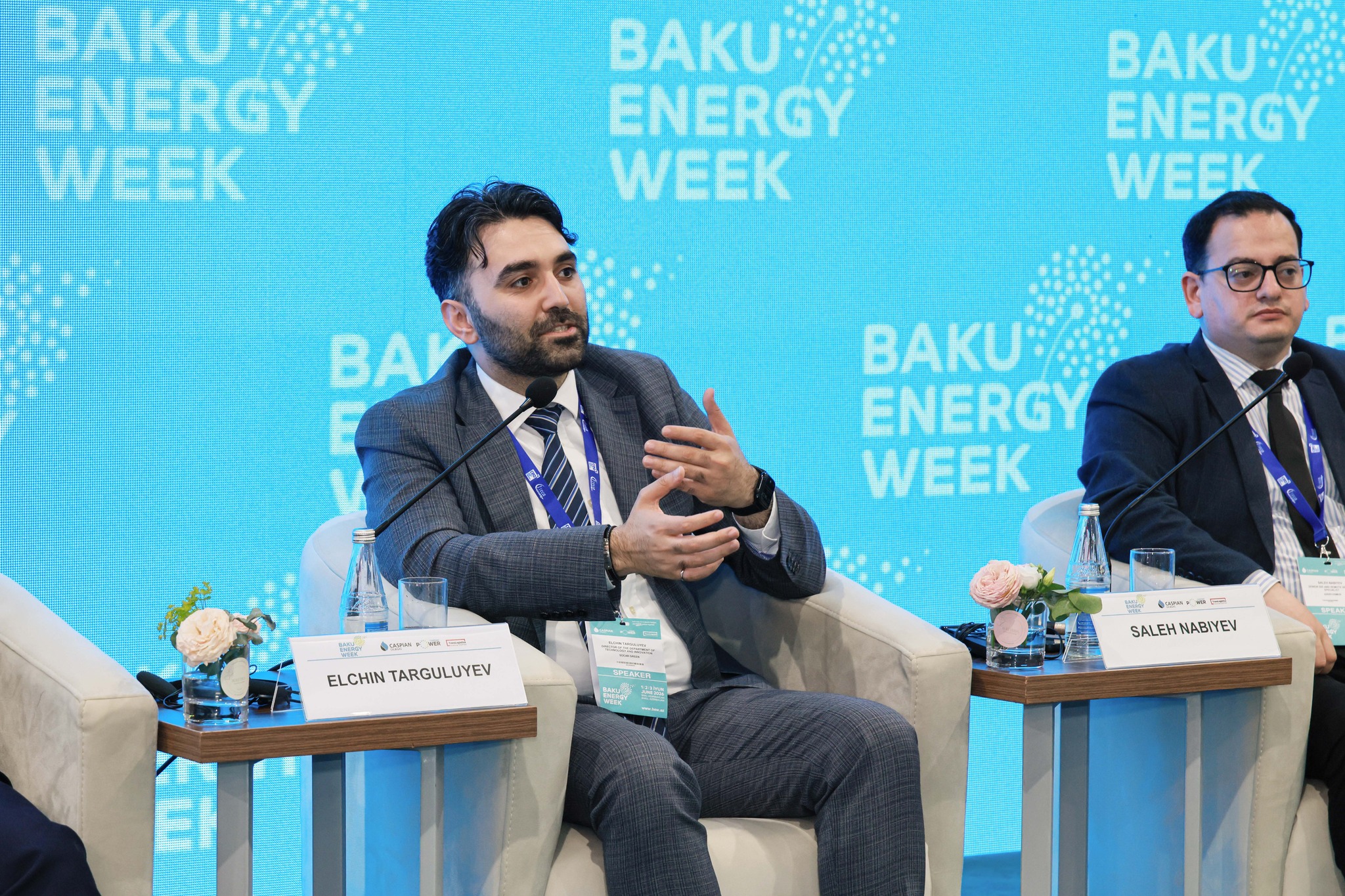
Hybrid systems based on renewable energy sources are a determining factor in ensuring the reliability of power grids in the context of large-scale deployment of renewable energy sources (RES), Elchin Targuluyev, Director of the Technology and Innovation Department of SOCAR Green, said speaking at a panel discussion within the 31st International Oil and Gas Exhibition, held in Baku, according to Report.
"With the growing integration of renewable energy sources into the energy system, the very nature of the task we face is changing. The question is no longer how to increase the share of RES, but how to do so without compromising the flexibility and reliability of the energy system. It is precisely in this context that hybrid renewable systems become one of the key tools ensuring grid security in large-scale deployment of RES. First of all, solar generation has a very specific profile and is significantly dependent on meteorological conditions. A similar situation is typical for wind energy. At the same time, their joint use actually reduces the variability of energy output. This is due to the fact that solar generation requires clear and windless weather, whereas wind energy, on the contrary, requires more dynamic and changeable atmospheric conditions. Thus, these two sources to some extent compensate for each other. And the integration of both technologies with energy storage systems allows achieving a more uniform and reliable energy output," Targuluyev said.
According to his assessment, this indicates that the further development of renewable energy will be predominantly hybrid in nature.
"However, hybridization also brings very serious challenges. In particular, it is necessary to select a site that has favorable potential for both solar and wind generation, or other combined technologies. As for hydrogen, in my view, it will become an integral element of the energy transformation in the coming decade, especially in the pursuit of carbon neutrality. This is primarily because heavy industry enterprises and sectors with difficult-to-reduce emissions cannot simply be electrified. Therefore, intermediate energy carriers are needed-something capable of converting renewable energy into fuel suitable for use at such hard-to-modernize facilities. And hydrogen is quite capable of fulfilling this function," added the head of the department.