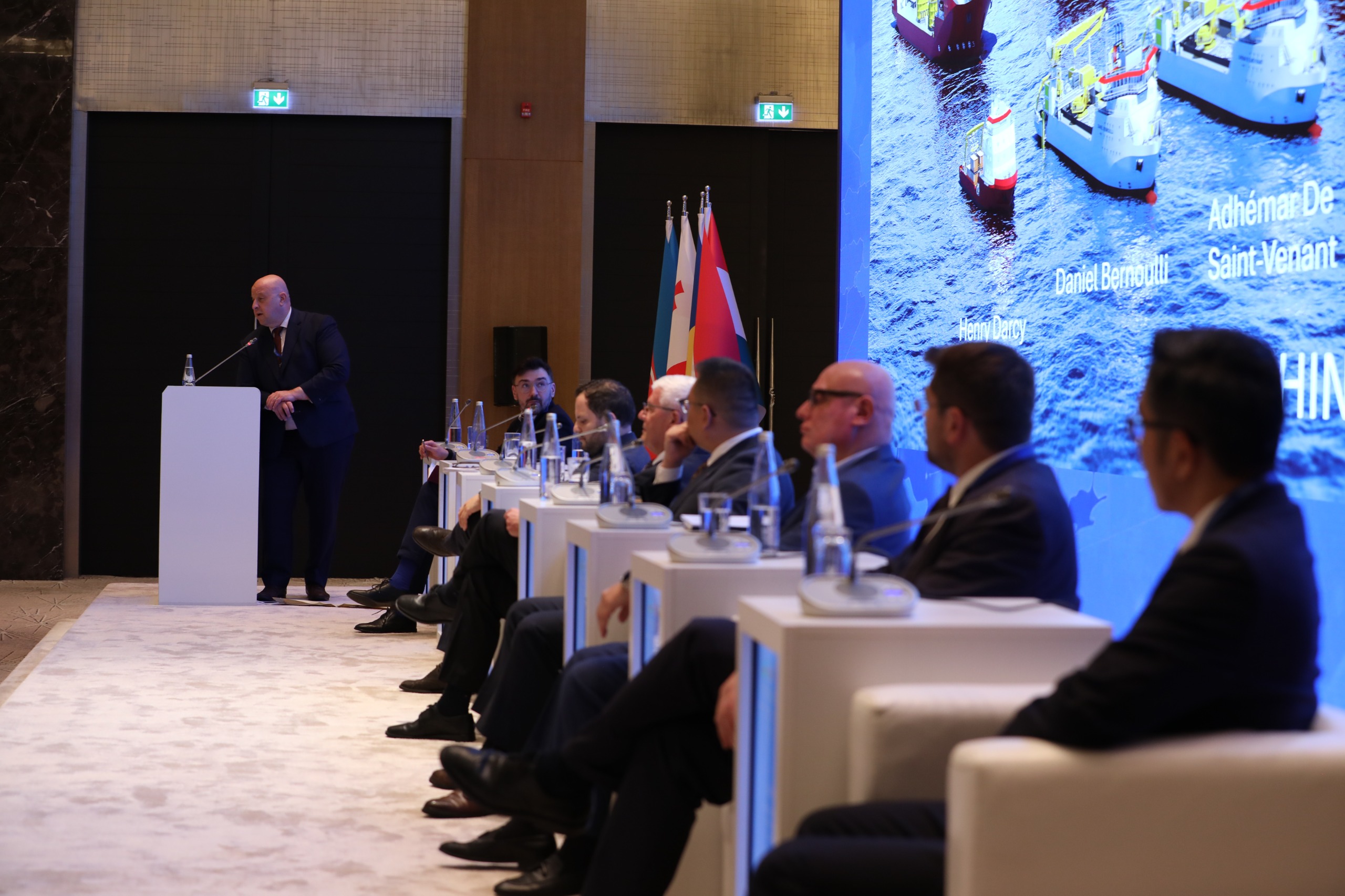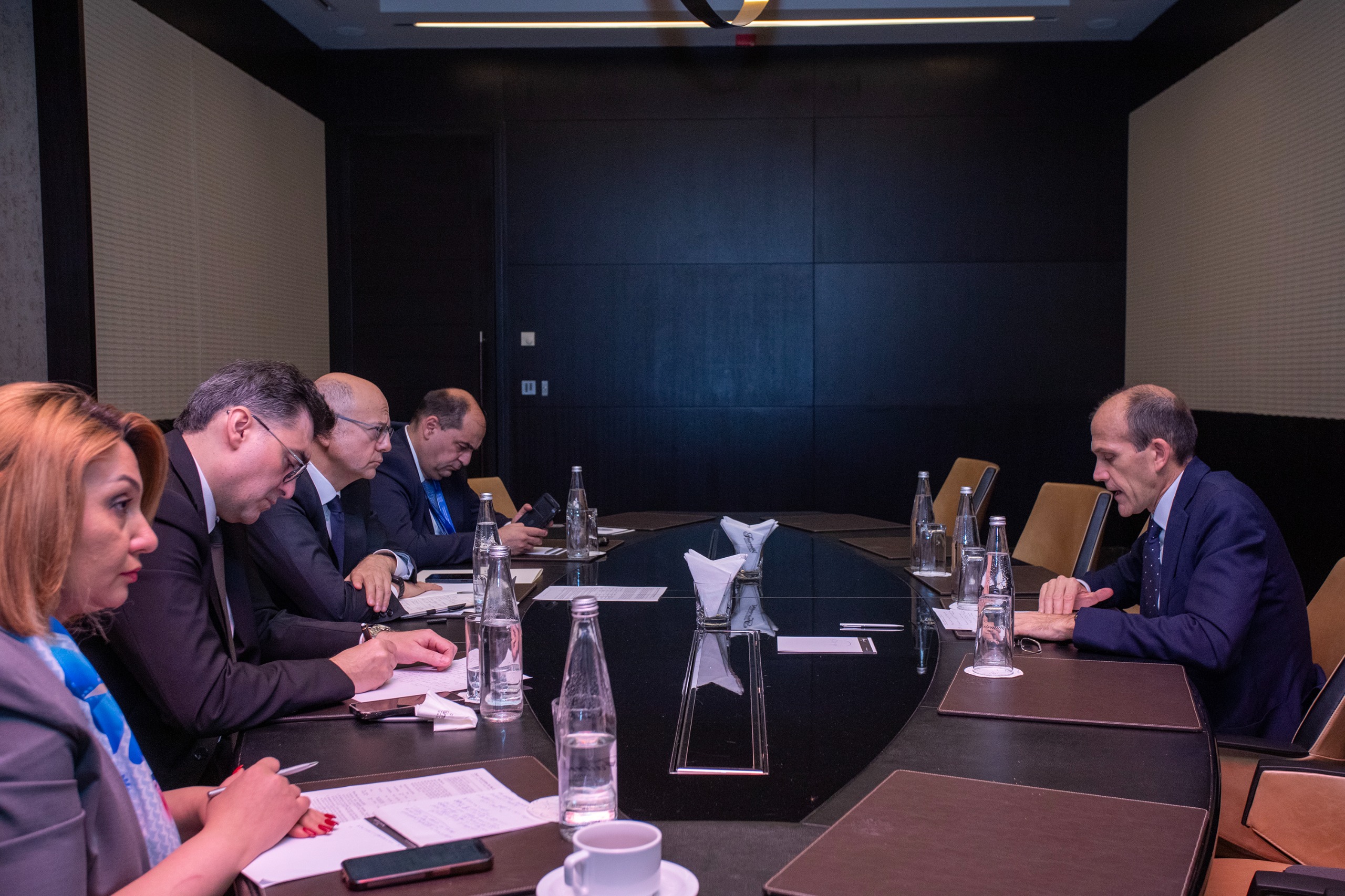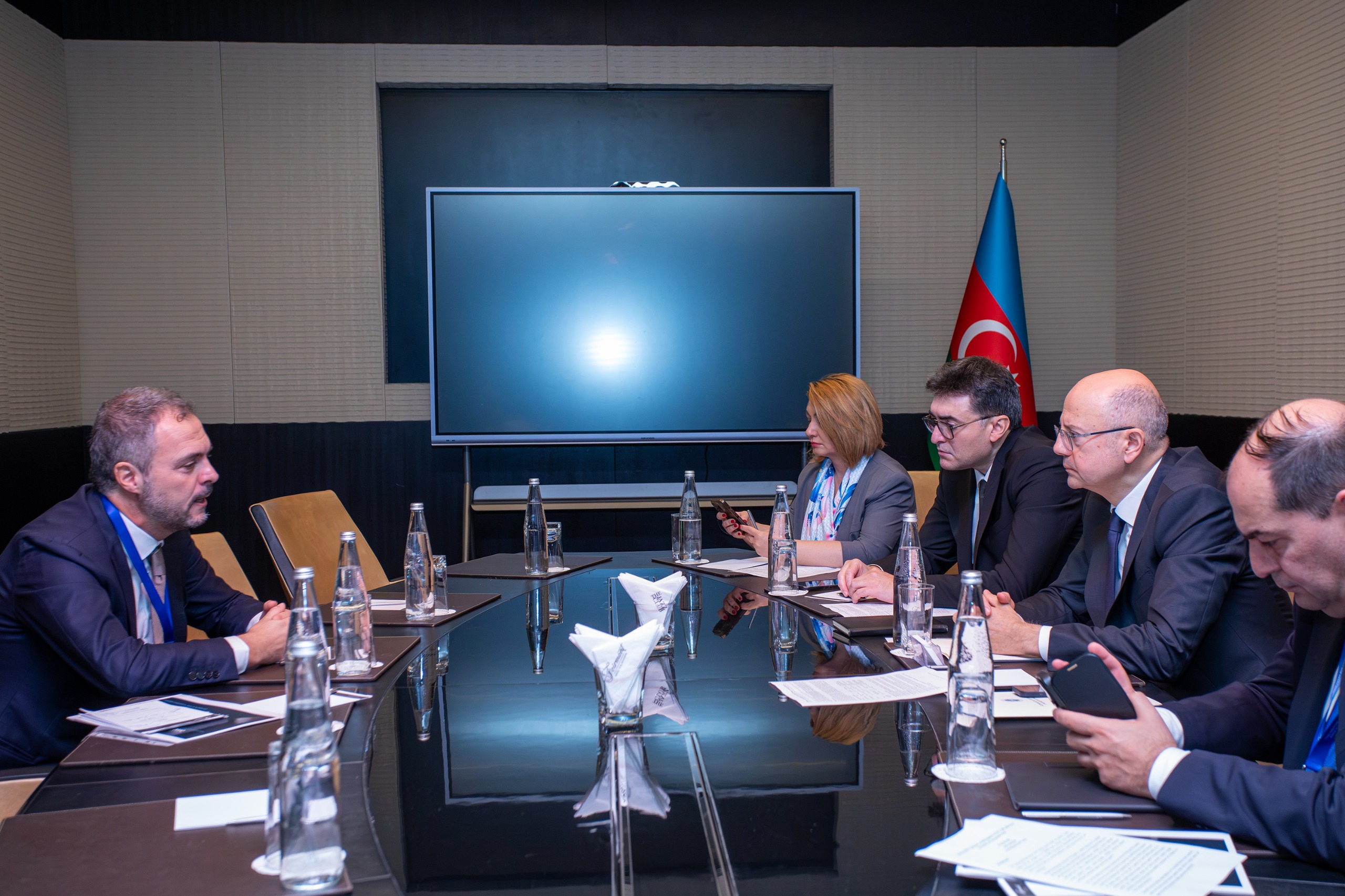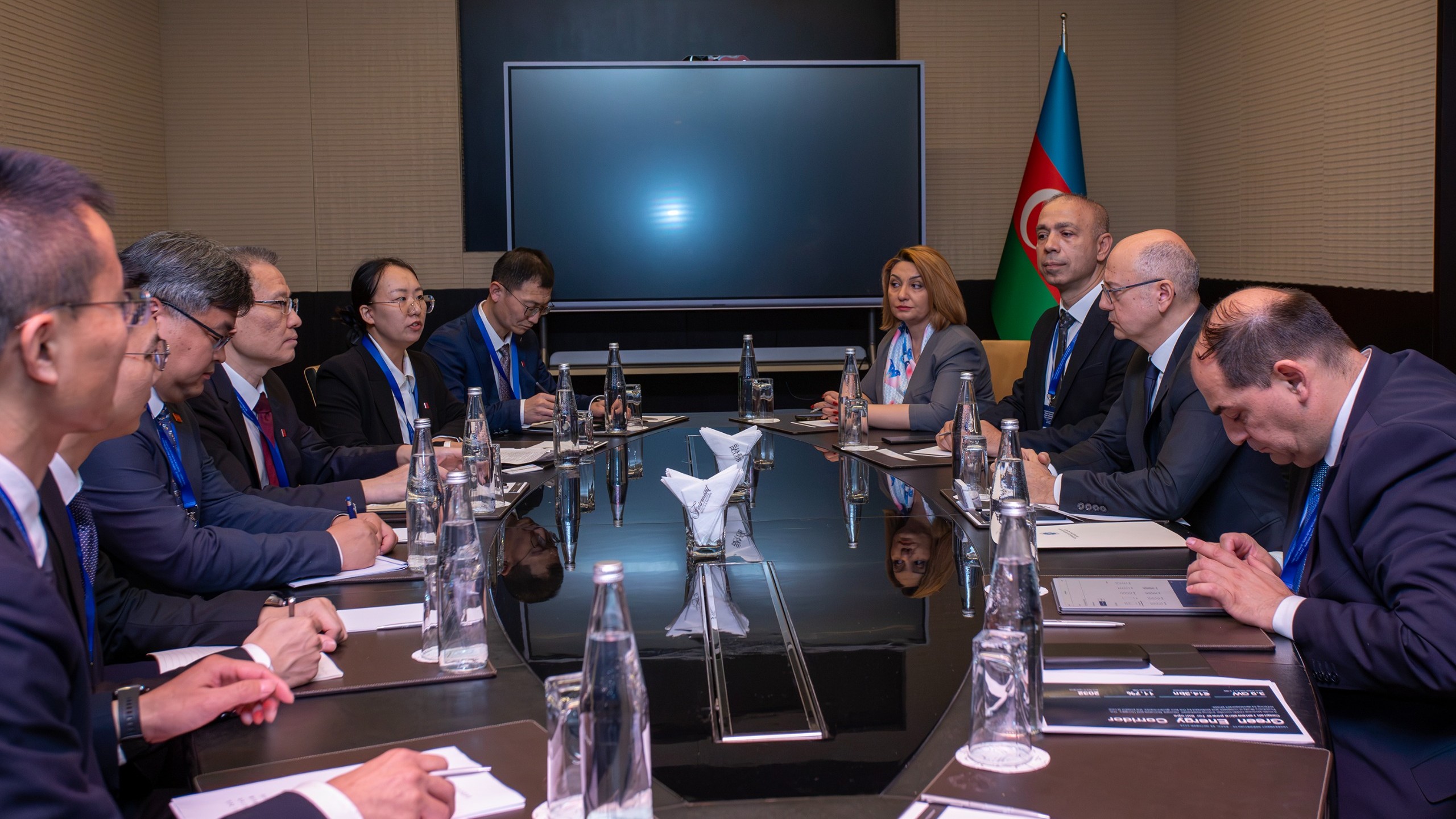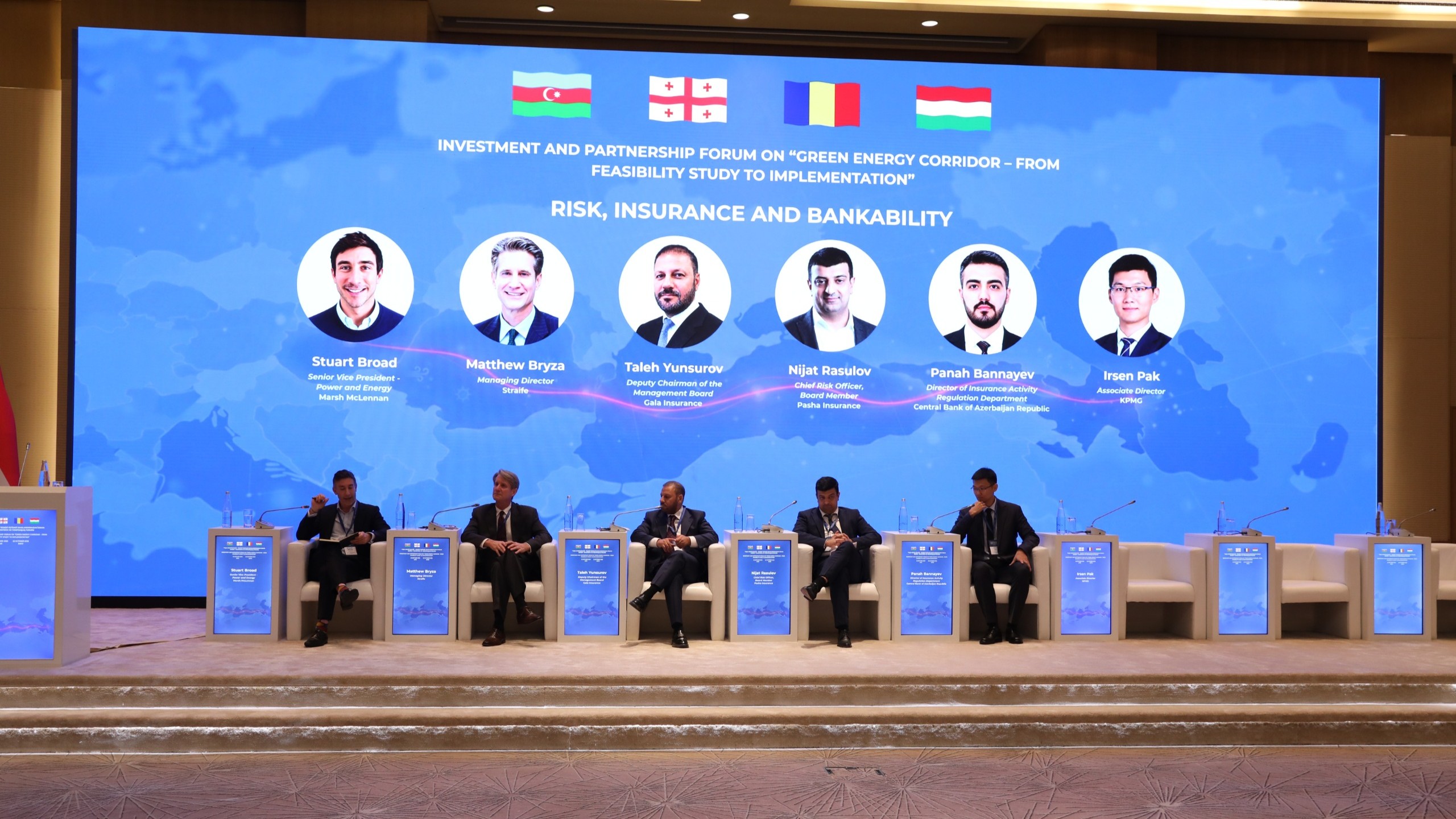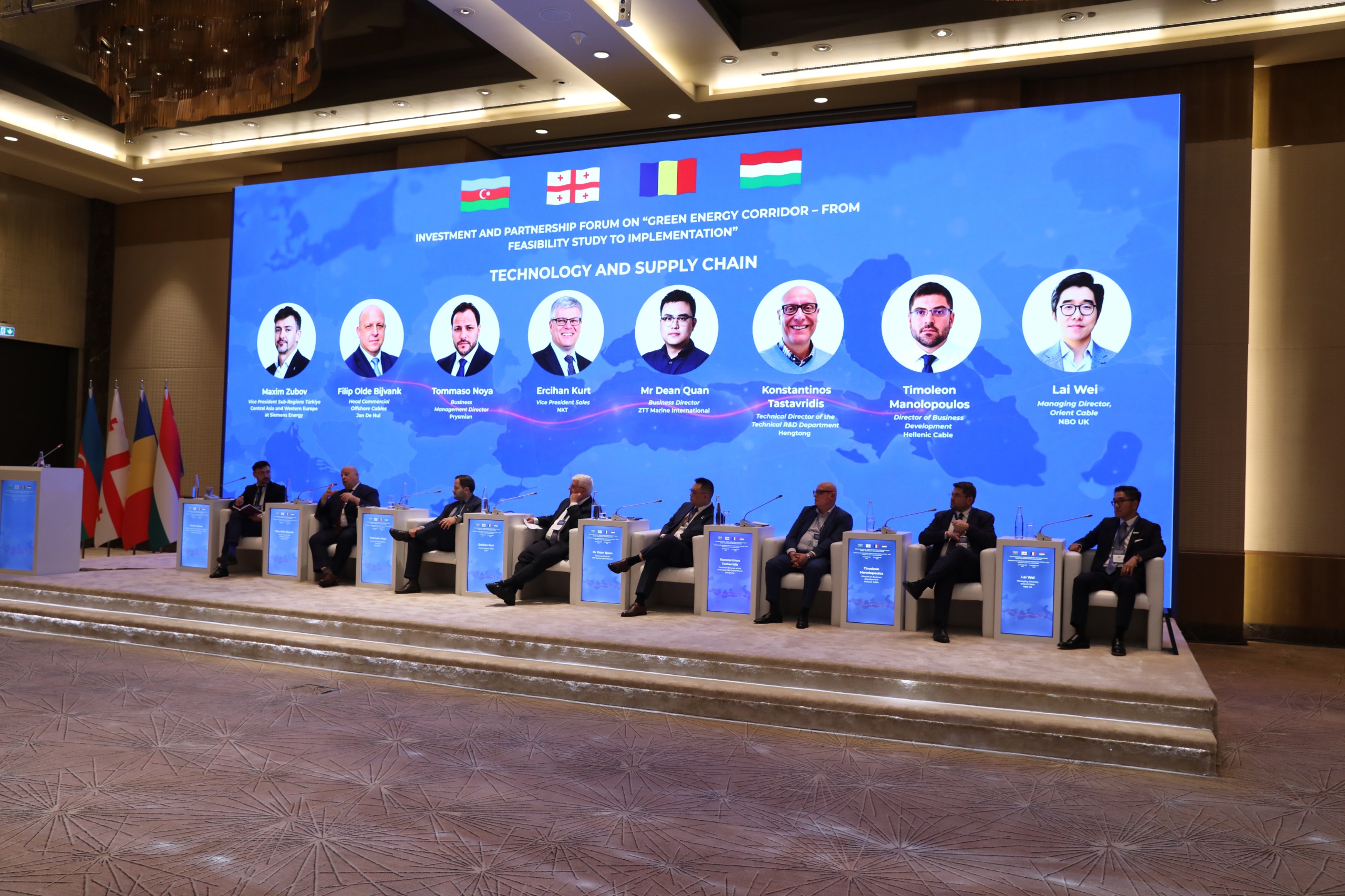
In the session dedicated to Technology and supply chain at the Green Energy Corridor: From Feasibility Study to Implementation Forum held in Baku, the project's technological solutions and practical implementation possibilities were discussed.
Renewables.az reports this, citing Azerbaijan's Ministry of Energy.
Representatives from Jan De Nul, Prysmian, NKT, ZTT, Hengtong, Hellenic Cable, and Orient Cable companies participated in the session moderated by Maxim Zubov, Vice President for Sub-Regions Türkiye, Central Asia and Western Europe at Siemens Energy.
At the session, presentations were made by Filip Olde Bijvank, Head of Commercial Offshore Cables at Jan De Nul Group, Tommaso Noya, Business Management Director of Prysmian, Ercihan Kurt, Vice President of Sales at NKT, Adnan Muhammad, Business Manager at ZTT, Konstantinos Tastavridis, Technical Director of the Technical R&D Department at Hengtong, Timoleon Manolopoulos, Director of Business Development at Hellenic Cable, and Lai Wei, Managing Director at Orient Cable NBO UK. The presentations focused on High-Voltage Direct Current (HVDC) technologies, production and installation of underwater power cables, Engineering, Procurement, and Construction (EPC) services, innovative technological solutions, and supply chain capabilities. The necessary production and contracting capabilities for the technical implementation of the project, the readiness of technology suppliers, as well as the prospects for the participation of international industrial companies in the implementation of large-scale energy infrastructure projects were discussed.
During the session, Jan De Nul presented the world's first cable technology capable of deployment at depths exceeding 4000 metres. It was noted that the technology had successfully undergone testing and demonstrated its effectiveness. Subject to the availability of appropriate financing mechanisms, this technology could also be deployed as part of the Green Energy Corridor project. The session provided an important platform for assessing the project's technological readiness, identifying opportunities for cooperation with potential suppliers and contractors, and facilitating the transition to the practical implementation phase.