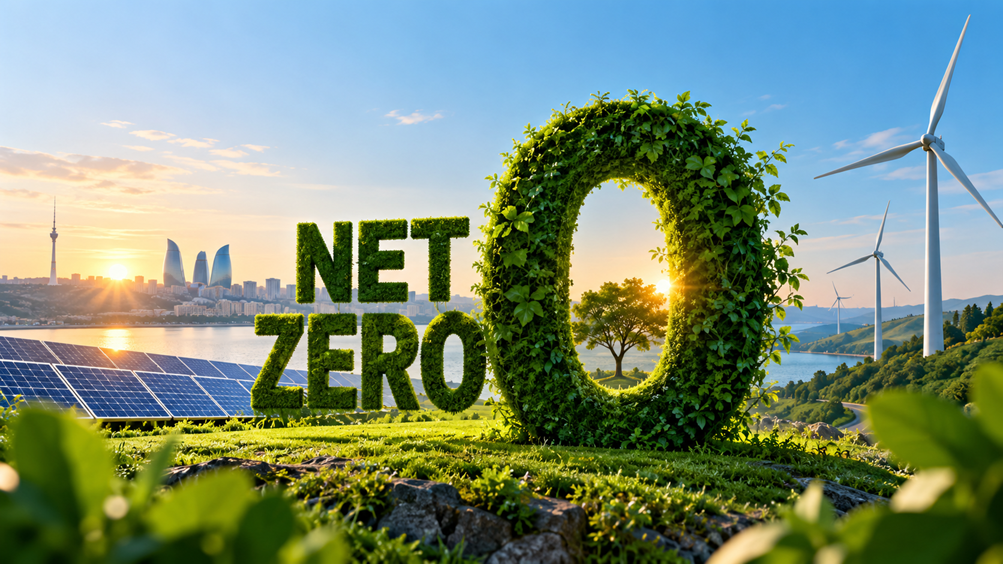
Azerbaijan aims to reduce greenhouse gas emissions by 40% by 2035 compared to 1990 levels and achieve net-zero emissions by 2060.
Renewables.az reports that this was stated in Long-Term Low-Carbon Development Strategy of Azerbaijan, approved by the Cabinet of Ministers of the Republic of Azerbaijan.
The strategy covers key sectors, including electricity, buildings, oil and gas, transport, industry, waste management, agriculture and other areas. It identifies the expansion of renewable energy sources, improvements in energy efficiency, electrification, the adoption of low-emission fuels and clean hydrogen, as well as carbon capture and storage, as major decarbonization pathways.
Long-Term Low-Carbon Development Strategy of Azerbaijan outlines sector-specific decarbonization measures and implementation mechanisms aimed at reducing greenhouse gas emissions by 40% by 2035 and achieving net-zero emissions by 2060.
Renewable energy potential and new capacity
According to the strategy, Azerbaijan's technical renewable energy potential exceeds 135 GW onshore and 157 GW offshore. The country's economically viable renewable energy potential is estimated at 27 GW, including 23 GW of solar energy, 3 GW of wind energy, 380 MW of bioenergy and 520 MW of hydropower potential from mountain rivers.
Under national plans, approximately 2 GW of renewable energy capacity is expected to be commissioned by 2027, primarily to meet domestic electricity demand.
An additional 4 GW of renewable energy capacity is planned for 2028–2030. Of this, approximately 1 GW is expected to serve domestic consumption, while the remaining capacity will be primarily linked to planned electricity export projects.
Furthermore, Azerbaijan aims to increase its green energy potential to approximately 6–8 GW by 2032, with a significant share of the generated electricity intended for export.
The document notes that onshore wind energy is currently more economically competitive and is considered a priority after solar energy. Offshore wind development is expected to be considered at a later stage, depending on technological advancements and market conditions.
Modernization of electricity grids and energy storage systems
The strategy envisages modernizing electricity transmission and distribution infrastructure to meet growing electricity demand and facilitate the integration of renewable energy sources into the national grid.
Planned measures include strengthening high-voltage transmission lines, constructing new substations, upgrading existing substations with automation and digital management systems, replacing transformers and introducing smart grid technologies.
According to the document, operational improvements in distribution networks could potentially reduce technical electricity losses by 1–2%.
The strategy also provides for the development of long-duration energy storage systems to store electricity generated from renewable sources and ensure a reliable power supply.
Citing information from Azerenergy OJSC, the document notes that 250 MW of energy storage capacity has already been installed.
The expansion of battery energy storage systems is expected to strengthen the integration of solar and wind power into the electricity grid, improve supply reliability and contribute to emissions reductions.
Karabakh, East Zangezur and Nakhchivan to be developed as green energy zones
The strategy identifies the transformation of the Karabakh and East Zangezur economic regions into green energy zones as a key component of Azerbaijan's low-carbon development policy.
It notes that the Green Energy Zone initiative is being implemented in these territories in accordance with the Decree of President Ilham Aliyev dated May 3, 2021. The initiative was subsequently incorporated into the COP29 Presidency's Action Agenda.
Within this framework, the regions' significant renewable energy potential is being utilized, while energy efficiency projects are also being implemented.
Additional measures include the development of smart agriculture, reforestation across thousands of hectares and improvements in environmental sustainability.
The strategy emphasizes that initiatives and investments in Karabakh and East Zangezur will serve as a model for the transition toward sustainable development.
The Nakhchivan Autonomous Republic has also been designated as a green energy zone. According to the document, the implementation of renewable energy projects is expected to enable Nakhchivan to become a net energy exporter.
This transformation is expected to strengthen the autonomous republic's strategic importance in the region and contribute to Azerbaijan's broader energy security and sustainable development objectives.
Green energy exports and hydrogen projects
The strategy identifies the expansion of green energy exports, including electricity and energy carriers such as hydrogen, as one of Azerbaijan's strategic objectives.
Planned measures include the development of offshore wind capacity, installation of electrolyzers and construction of the necessary energy infrastructure.
The document states that renewable electricity generated beyond domestic demand is expected to be directed toward export markets. Battery energy storage systems are also expected to support this process.
In addition, the strategy envisages promoting the development and implementation of green hydrogen export projects to strengthen Azerbaijan's position as a potential supplier in international hydrogen markets.
Improving energy efficiency in buildings
The strategy envisages gradually reducing natural gas consumption in the buildings sector through electrification and the wider implementation of energy efficiency measures.
According to the document, all buildings are expected to be equipped with renewable-powered electric air-to-water heat pumps by 2060.
Electric heat pumps are reported to be approximately three times more efficient than conventional natural gas heating systems.
The strategy also expects all existing and new buildings to have optimal thermal insulation by 2060. This will involve the use of advanced insulation materials and double-glazed windows.
Furthermore, the gradual replacement of natural gas cooking appliances with electric stoves powered by renewable energy, along with the wider adoption of LED lighting and energy-efficient household appliances, is envisaged.
These measures aim to reduce energy consumption, utility costs and greenhouse gas emissions in the buildings sector.
Reducing emissions from the electricity sector
The strategy states that greenhouse gas emissions from Azerbaijan's electricity sector amounted to 14.4 million tonnes of CO₂ equivalent in 2022, accounting for approximately 20.7% of the country's total emissions.
The primary source of emissions in this sector is the combustion of natural gas for electricity generation.
Increasing the share of renewable energy, improving energy efficiency, modernizing electricity grids and developing energy storage systems are identified as key measures to reduce emissions.
Investments required for the net-zero transition
The strategy highlights that achieving net-zero emissions by 2060 will require substantial investments across all sectors.
In the electricity sector, a significant share of capital investment is expected to be directed toward the installation of battery energy storage systems and the development of wind power plants.
Further investments will also be necessary to expand solar energy capacity and modernize electricity grid infrastructure.
The document notes that, despite high initial costs, the transition to renewable energy sources could reduce operating costs in the long term and improve the efficiency of electricity generation.
International financial support, technology transfer, concessional financing, grants, public-private partnerships and other investment mechanisms are highlighted as important instruments for achieving the net-zero target.
Azerbaijan's Long-Term Low-Carbon Development Strategy outlines sector-specific decarbonization measures and implementation mechanisms aimed at reducing greenhouse gas emissions by 40% by 2035 and achieving net-zero emissions by 2060.